


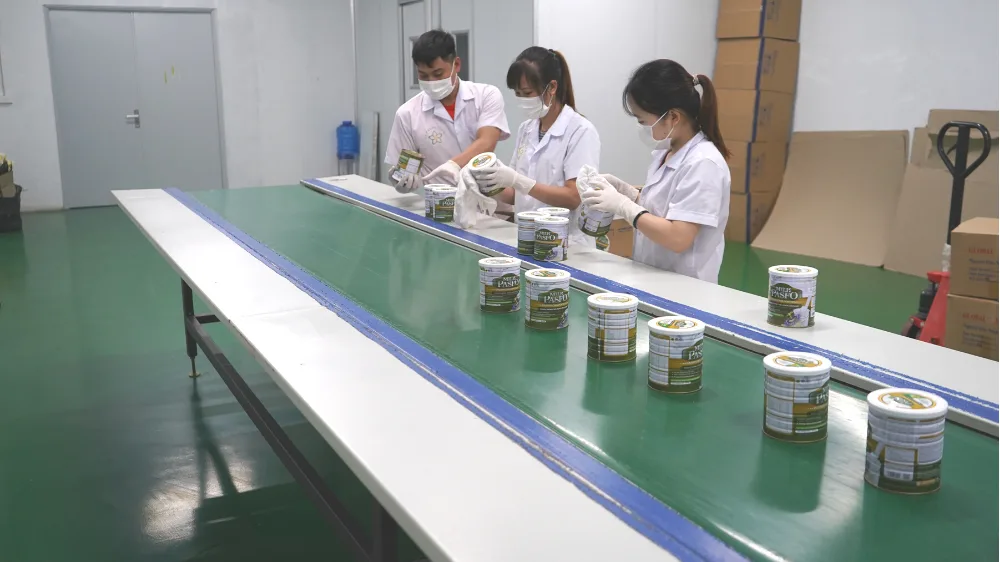
If you plan to launch a milk powder or nutrition powder under your own brand, the first decision is the cooperation model with the factory: OEM or ODM. The choice affects who owns the formula, how long development takes, how much you invest upfront, and how easily you can switch factories later.
Short answer
- OEM (Original Equipment Manufacturing): you bring the formula and specifications. The factory produces to your recipe.
- ODM (Original Design Manufacturing): the factory develops or adapts the formula with you, then produces it.
- Many projects sit in between: you set the product target, the factory proposes a formula, and you approve each sample round.
Side-by-side comparison
| Point | OEM | ODM |
|---|---|---|
| Formula comes from | Your brand | The factory, or co-developed |
| In-house expertise you need | Formulation, raw-material specs, QA | Clear product brief and decision-maker |
| Development effort on your side | Higher | Lower |
| Formula ownership | Usually yours | Must be agreed in the contract |
| Switching factory later | Easier, if you hold full specs | Harder, unless formula rights are transferred |
| Best for | Established brands, pharma and nutrition companies with R&D | New brands, distributors, retailers entering private label |
Questions to settle before choosing
- Do you have a complete formula? A full formula means ingredient list, ratios, raw-material specifications and the nutrition values you intend to declare.
- Who will own the formula? Under ODM this must be written into the contract, together with confidentiality terms.
- Which market will you sell in? Vietnam and export markets apply different standards. For Vietnam, milk powders are referenced against national technical regulation QCVN 5-2:2010/BYT; export markets usually look at Codex and their own rules.
- Who files the product declaration? In Vietnam, the product owner named on the label is responsible for the product declaration under Decree 15/2018/ND-CP, even when a factory or consultant prepares the dossier.
- How many sample rounds can you afford in time? ODM projects often need several rounds to settle taste, solubility and stability.
Common mistakes
- Choosing ODM to save time, then not agreeing who owns the final formula.
- Sending an OEM formula without raw-material specifications, so the factory has to guess grades and suppliers.
- Declaring nutrition values from the formula sheet only. Values on the label should be confirmed by laboratory testing of the actual product.
- Planning claims on the label that the product dossier does not support.
What to send a factory first
A one-page product brief: target user (adults, older adults, sports, plant-based and so on), format (can, pouch, sachet), key nutrition targets, flavour, target retail price, sales channel and market. With that brief, a factory can tell you whether OEM, ODM or a hybrid makes sense.
This article is general guidance, not legal advice. Products for infants and young children under 36 months follow separate, stricter rules and are not covered here.
Planning a milk powder brand? Send your product brief through our contact page and a NutriHealth specialist will discuss the cooperation model with you.
FAQ
Is OEM cheaper than ODM?
Not always. OEM can reduce development work at the factory, but you carry the cost of building the formula yourself. Compare total cost, including sample rounds and testing.
Can I start with ODM and move to OEM later?
Yes, if the contract gives you the formula rights and full specifications. Agree on this before the first sample round.
Do I need my own company in Vietnam to sell there?
To place a product on the Vietnamese market, a legally registered entity must stand behind the product and its declaration. Many foreign brands work through a local importer or distributor. Check the requirements for your case with a local legal adviser.