



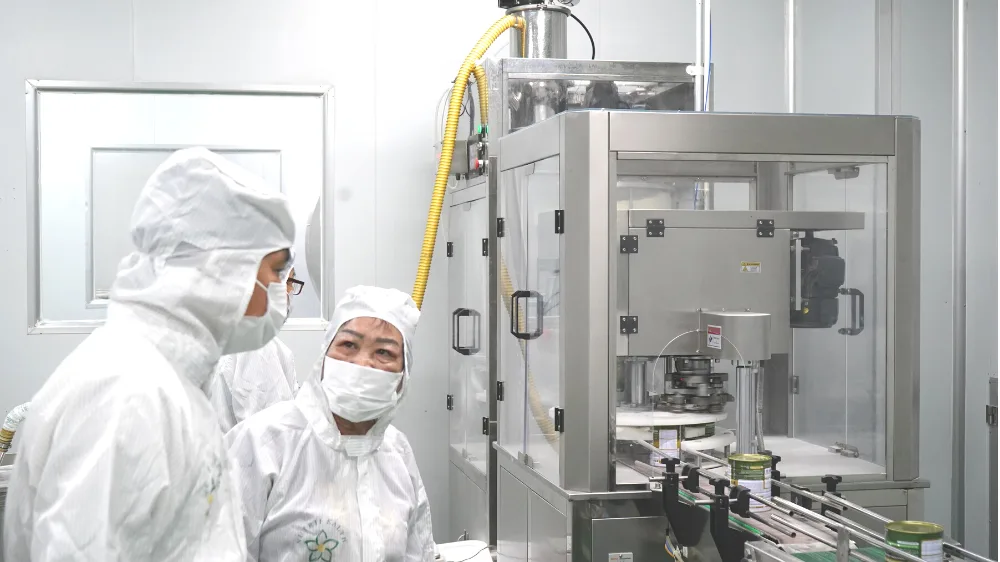
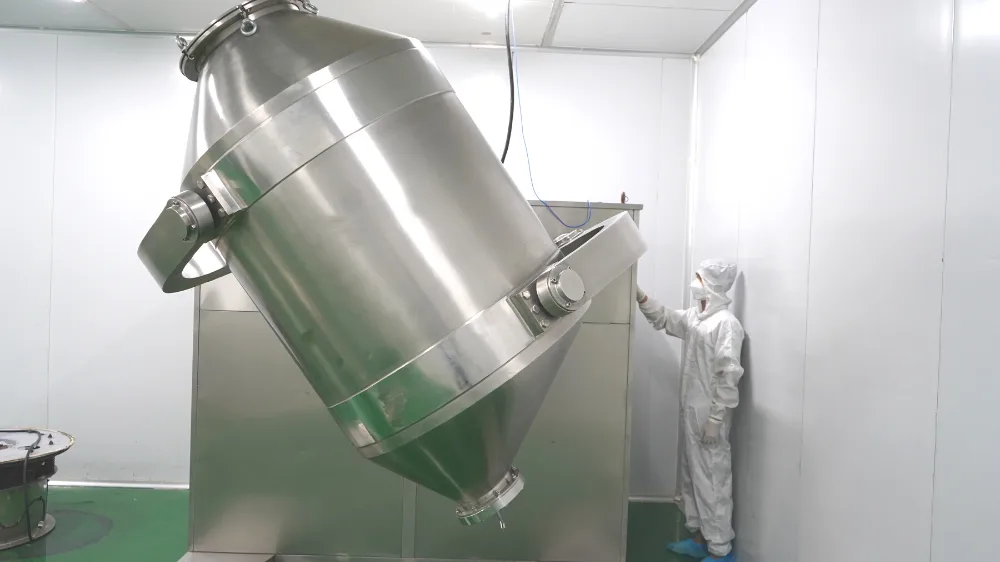
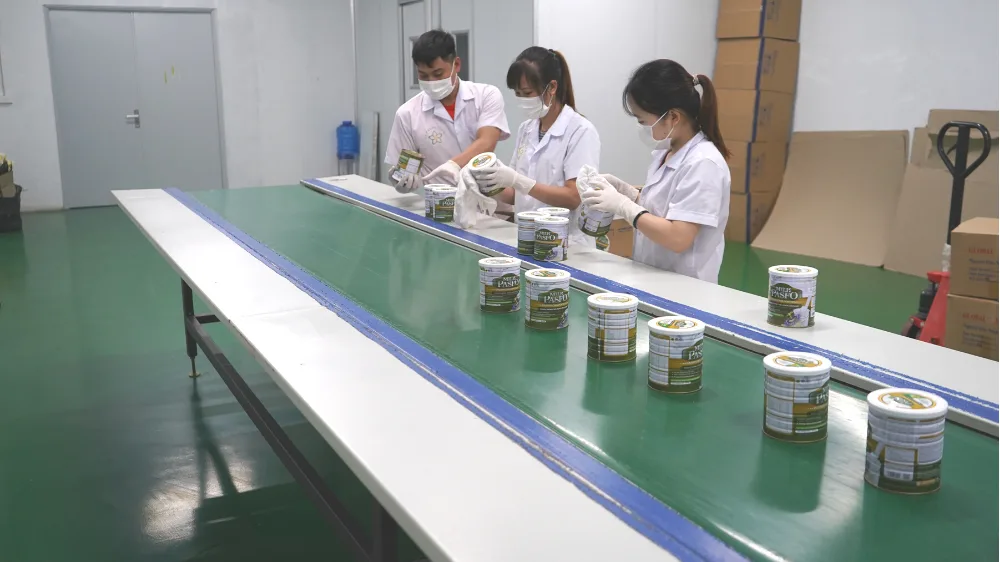
Short answer: Private label milk powder means a manufacturer produces a powdered milk or nutrition product that is sold under your brand. You own the brand, the packaging design and the commercial decisions; the factory provides formulation support, production, quality control and the batch documents. A typical project moves through seven steps, from a written product brief to a first production batch, and most delays come from unclear briefs, label changes and regulatory paperwork rather than from production itself.
Private label, OEM and ODM: how they relate
“Private label” describes the commercial result: the product carries your brand. OEM and ODM describe who owns the formula. With OEM you bring the formula; with ODM the manufacturer proposes or adapts one. Both can be private label. See OEM vs ODM milk powder manufacturing for a side-by-side comparison.
Seven steps from idea to first batch
- Define the product and the market. Product type (for example adult milk powder, plant-based or cereal-based powder), target users, pack format, retail price range and the country where it will be sold.
- Write a product brief. One document the factory can quote from: target nutrients or ingredients, flavour, pack size, quantity per order, destination market. A clear brief shortens every later step.
- Choose the model and the factory. Decide OEM or ODM, then compare manufacturers on the same brief. Ask to see certificates and check their scope, not only their names.
- Develop and approve samples. Expect more than one round. Approve the sample in writing, including taste, solubility and appearance.
- Confirm stability and shelf life. The shelf life on your label should be based on testing for your formula and your packaging, not copied from another product.
- Finalise packaging and label for the destination market. Label content and product registration depend on where you sell. Confirm the rules of your destination market with your importer or a regulatory adviser before printing. If you plan to sell in Vietnam, the declaration route depends on the product category; see our Vietnamese guide on self-declaration versus registration.
- Produce the first batch and review it. Agree in advance which documents come with each batch (for example a certificate of analysis) and how deviations are handled.
Can, pouch or bag-in-box: which pack works for exported milk powder?
Short answer: Milk powder needs protection from moisture and oxygen. Metal cans, usually nitrogen-flushed, protect best and look premium; laminated pouches are lighter and cheaper to ship; bag-in-box sits between the two. Choose by shelf-life target, transit conditions, retail channel and print minimums, then confirm shelf life by testing in the chosen pack.
| Format | Protection | Freight and handling | Retail impression | Watch out for |
|---|---|---|---|---|
| Metal can (often nitrogen-flushed) | Highest barrier to oxygen and moisture | Heavier, bulkier; dents in transit | Premium, familiar in pharmacies | Dented cans may be rejected by buyers |
| Laminated stand-up pouch with zip | Good, depends on film layers | Light, flat when empty, cheaper per unit shipped | Modern, e-commerce friendly | Seal strength; zip after opening |
| Bag-in-box (inner bag, carton outside) | Good inner barrier; carton adds no barrier | Stackable; carton can crush in humidity | Mid-market, supermarket shelves | Carton printing and humidity in containers |
| Single-serve sachet or stick | Good per portion | Many units per carton | Sampling, travel packs | Higher packing cost per gram |
Agree with the factory before printing
☐ Pack format and net weight per unit for each destination.☐ Whether nitrogen flushing or an oxygen absorber is used.☐ Shipping carton specification and how many units per carton.☐ Print minimums for cans, film or boxes, and who orders them.☐ Stability test in the final pack before you fix the shelf life on the label.
Format interacts with the production route — see spray-dried or dry-blended — and with the release checks described under quality control.
The pack you choose also changes how long the powder keeps – see how to set shelf life and storage conditions for private label milk powder.
What your brand owns, and what to put in the contract
| Item | Usually owned or controlled by | What to agree in writing |
|---|---|---|
| Brand name and trademark | You | Register it in each market where you sell |
| Packaging artwork | You | Who keeps the print files and plates |
| Formula | You (OEM) or the manufacturer (ODM) | Whether the formula can be transferred, and confidentiality |
| Production process | Manufacturer | Quality standards and batch documents you will receive |
| Product registration | Depends on the market | Who files, who holds the registration, what happens if you change factory |
Costs to plan beyond the unit price
The unit price covers ingredients, packaging, production and routine testing. A launch budget also needs: sample rounds, stability testing, product registration or declaration, packaging design and print minimums, freight and import costs, and marketing after the first shipment arrives. Ask every factory what its quote includes so you compare like with like.
Private label protein powder: what changes in the specification?
Short answer: Protein powders (whey or plant-based) follow the same private label steps as milk powder, but the specification needs more detail on protein source, protein per serving, mixability, flavour masking and contaminant testing. Settle these in writing before samples, and check the protein and label wording against the rules of the market where you will sell.
| Specification item | Why it matters for protein powder | What to ask the manufacturer |
|---|---|---|
| Protein source and form | Whey concentrate, whey isolate and plant proteins (pea, rice, soy) differ in protein content, lactose, taste and cost | Which raw material grades are available; supplier documents per lot |
| Protein per serving | Usually the main number on the front of pack; it must match the formula and test results | How the declared value is calculated and verified by testing |
| Mixability and foam | Protein powders can foam, clump or settle | Is the powder agglomerated or lecithinated; shaker test in the sample round |
| Taste and flavour | Plant proteins have earthy notes; whey can taste flat | Which flavours and sweeteners are permitted in the target market |
| Contaminant testing | Plant proteins and some ingredients need checks such as heavy metals | Which parameters are tested per lot and by which laboratory |
| Allergens and claims | Milk and soy are common allergens; «vegan» needs supporting documents | Allergen statement; documents behind any «vegan» or similar claim |
Two practical points: decide early whether you bring your own formula or ask for one (OEM or ODM), and ask how each lot is released before shipment (see quality control). Avoid performance or muscle-building claims on packs and ads unless the target market’s rules and your registration allow them.
Should you specify where the base milk powder comes from?
Short answer: You can, and it is worth doing if origin is part of your brand story or your buyers ask for it. Specifying origin narrows supplier choice and can raise cost, and any origin wording on the pack must be backed by documents for every lot. If origin does not matter, specify quality parameters instead and let the factory source.
| Option | When it fits | What it changes |
|---|---|---|
| Specify origin (for example New Zealand, EU, USA) | Origin is on the label or in marketing; distributor requires it | Fewer suppliers; price follows that market; origin documents needed per lot |
| Specify quality only (fat, protein, moisture, solubility, contaminants) | Price and consistency matter more than origin | Factory can switch suppliers within your spec; tell them if you need notice of changes |
| Approved-supplier list | You want control without one single source | You approve 2–3 suppliers in advance; reduces supply risk |
Documents to request for each lot of base powder
☐ Certificate of analysis matching your specification.☐ Certificate of origin if origin appears on the pack or in sales materials.☐ Health or export certificate from the country of origin where your destination market requires it.☐ Notice before the factory changes supplier or origin.
Write the choice into your specification and contract — see who should own the formula and specifications — and ask how these papers travel with your finished lots (see lot documents). Check the destination market’s labelling rules before printing any origin claim.
What goes into a milk powder specification sheet?
Short answer: The product brief starts the project; the specification closes it. Once you approve a sample, turn it into a signed specification that lists every parameter with a target or limit, the test method and how often it is tested, plus pack, storage and shelf-life terms. Every lot is then accepted or rejected against this one document.
| Section | What to write | Why it matters |
|---|---|---|
| Product identity | Product name, approved sample reference and date, formula version | Stops silent formula changes |
| Composition | Ingredient list in order, declared nutrients per 100 g and per serving, with tolerances | Must match your label and registration |
| Physical properties | Moisture, bulk density, solubility or dispersibility, particle appearance (for example scorched particles), colour | Bulk density decides fill weight per can and scoop size |
| Sensory | Taste, odour, appearance after mixing; how the reference sample is kept | Most disputes start with “it tastes different” |
| Microbiological limits | Organisms, limits and sampling plan required by your destination market | The market’s rules set the floor; your spec can be stricter |
| Contaminants | Which ones apply (for example aflatoxin M1, heavy metals) and test frequency | Frequency is a cost decision — agree it in writing |
| Test methods | Method for each parameter; in-house or external lab | Same parameter, different method, different result |
| Packaging | Pack format, net weight tolerance, gas-flush and seal checks, coding format | Links the spec to the line, not just the powder |
| Storage and shelf life | Storage conditions and shelf life, based on stability testing in the final pack | Not copied from another product |
| Change control | Factory must notify and get approval before changing an ingredient, supplier or process step | Protects the product you approved |
Before you sign
☐ Every number on your label can be traced to a line in the specification.
☐ Your certificate of analysis lists the same parameters as the specification.
☐ Both sides keep the same version, and every revision is dated and signed.
If you have not sent a brief yet, start with what to send a factory first.
How do you read a milk powder certificate of analysis (COA) before accepting a lot?
Short answer: A certificate of analysis (COA) helps only if it covers your lot and your agreed specification. Check four things: lot number and dates match the goods; every specification parameter has a result and a limit; each result names a test method; and you know which results come from the factory lab and which from an accredited external lab.
| On the COA | What to check | Red flag |
|---|---|---|
| Product name, lot number, production and expiry dates | Same as the pack, the packing list and the factory’s release record | No lot number, or one lot number covering several production days without explanation |
| Limits next to each result | The limits in your signed specification, not the factory’s generic sheet | Results without limits, or limits looser than you agreed |
| Physical and chemical results (for example moisture, protein, fat, solubility, scorched particles, bulk density) | Each result inside your limit; units stated | Parameters from your specification missing |
| Microbiological results | Organisms and sampling match your specification and the destination market’s rules | “Complies” written instead of a result, with no method |
| Contaminants you agreed to test (for example aflatoxin M1, heavy metals) | Frequency agreed: every lot, or periodic with the latest report attached | An old periodic report presented as if it were for this lot |
| Test method for each line | A recognised method (for example ISO, AOAC or a national standard) is named | No method column |
| Laboratory and signature | In-house or external; for external labs, ISO/IEC 17025 accreditation covering those tests; date and signatory | No signature, or an accreditation scope that does not cover the test |
Agree before the first order
☐ Which parameters are tested on every lot, and which periodically.
☐ Which tests go to an external accredited lab.
☐ How long retained samples are kept, so a disputed lot can be retested.
☐ What happens when a result is outside the limit — hold, retest, rework or reject — and who decides.
A COA is a summary, not proof on its own. Compare it with the lot-release procedure you reviewed in the audit checklist, and with the limits written in the specification section above.
Before you contact a manufacturer
Prepare your product brief, target market, expected quantity for the first and following orders, and your preferred pack format. The checklist in our OEM vs ODM guide lists what to send first.
Working with NutriHealth
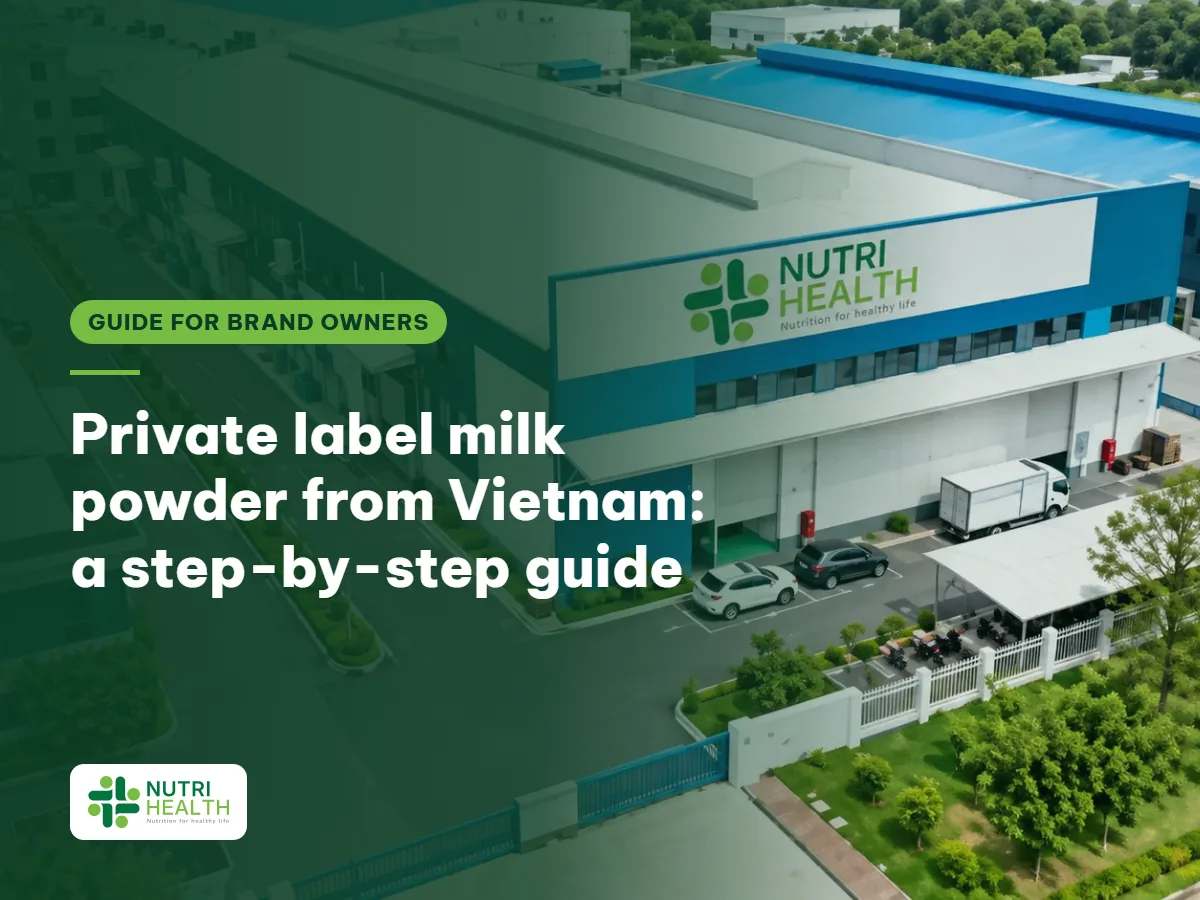
Our factory in Yen My II Industrial Park, Hung Yen, Vietnam holds ISO 22000:2018, HACCP and GMP certifications issued by ISSQ. Minimum order quantity is 1,200 cans for 850–900 g cans and 2,400 cans for 450 g cans. Samples take about 1 week with ingredients in stock, and the first batch is delivered in 30–45 working days. Download our company profile (PDF).
FAQ
Is private label the same as white label?
The terms are often used loosely. “White label” usually means a ready-made product sold by several brands with only the label changed; “private label” usually implies a product made for one brand, sometimes with its own formula. Ask the manufacturer which one they are offering.
Can I change manufacturer later?
Yes, if you own the formula or have agreed transfer rights, and if your product registration allows it. Settle this in the contract before the first order.
Does this guide cover infant formula?
No. This guide does not cover infant formula or products for children under 36 months, which follow separate rules.
Talk to us: send your product brief and we will reply with the questions we need answered to prepare a quote. Phone/Zalo +84 81 474 18 38.
Last updated 6 November 2026.